Illinois has separate charging rules for renters and condominium or common-interest-community unit owners. Start with who owns the home and the parking space. The Electric Vehicle Charging Act applies to tenants, landlords, unit owners, and associations in new and existing homes with parking, but the request recipient and conditions differ. A renter’s route does not bypass the owner or association when the proposed work affects shared property.
If you rent
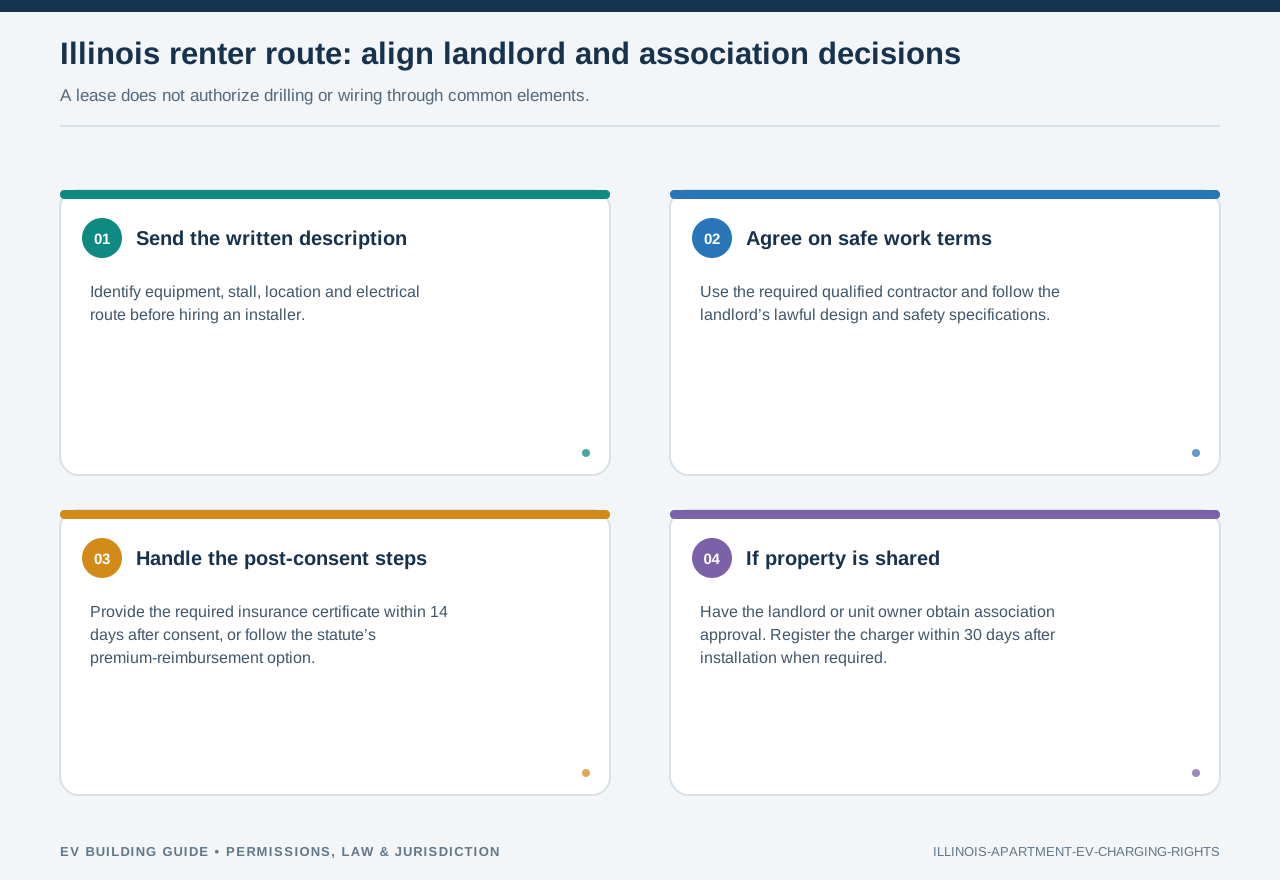
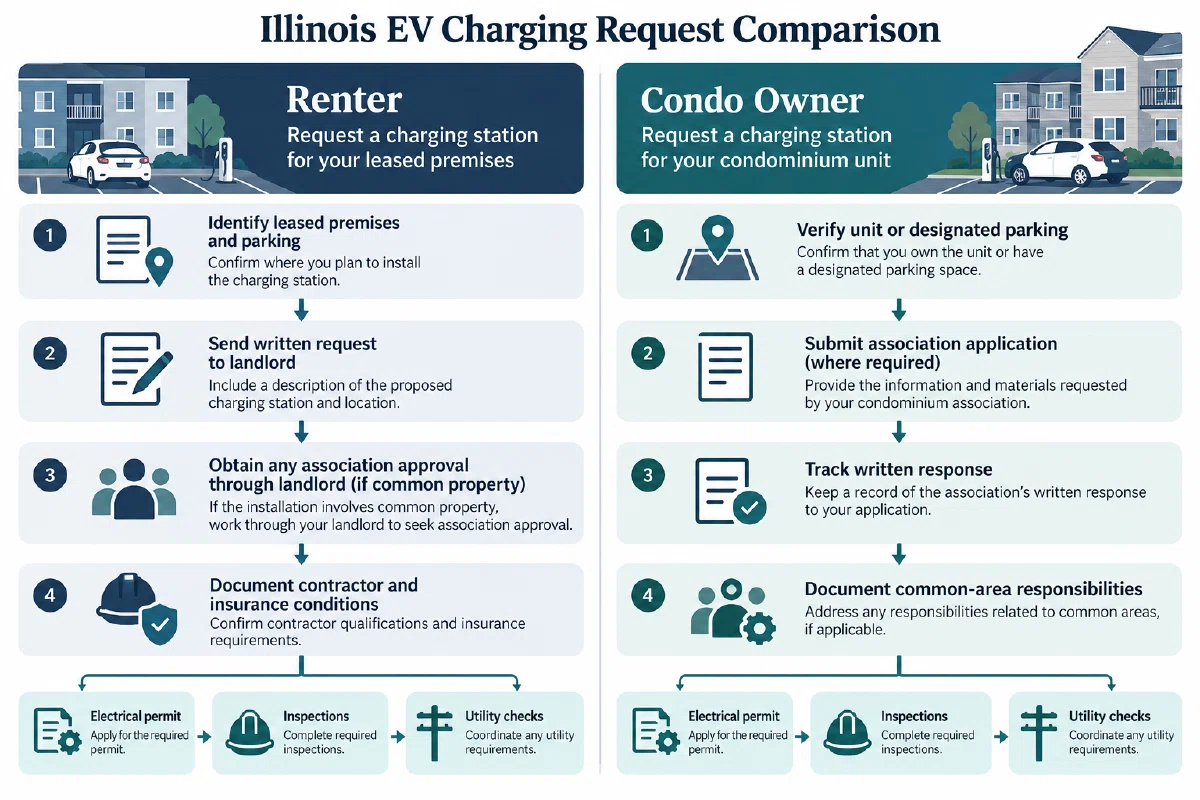
Under 765 ILCS 1085/35, a tenant may install at the tenant’s expense a Level 1 outlet, Level 2 outlet, or Level 2 charging system on or in the leased premises for personal use, subject to the statute’s conditions. Give the landlord a written description of the equipment, location, electrical route, and parking space before hiring an installer. Ask which building and lease procedures apply and obtain a written decision about any required access or work on the landlord’s property.
The statute lets a landlord set bona fide safety rules consistent with code or recognized safety standards, require registration within 30 days after installation, and impose reasonable rules about size, placement, or appearance. Before installing, the tenant must agree in writing to comply with the landlord’s design specifications, use a duly licensed and registered electrical contractor familiar with charger installation and code requirements, and provide the required insurance certificate within 14 days after consent or reimburse the landlord for the actual attributable premium increase if the landlord chooses that option.
The law limits extra charges but allows specific cost recovery, such as actual electricity supplied by the landlord, a reasonable access or network fee, a restoration deposit, and a reasonable fee to reserve a particular space in an area accessible to other tenants. If a charger is installed in shared-access parking, additional damage, insurance, upkeep, and removal duties can affect later tenants with exclusive rights to the area. A removable charger paid for by the tenant may be removed at lease end or sold to the landlord or another tenant by agreement; no one is required to buy it.
If the landlord owns a unit in an association, the tenant must obtain the association approval through the landlord or owner and follow the association provisions that apply. A lease alone does not authorize drilling, wiring, or other work on common elements.
If you own a condo unit
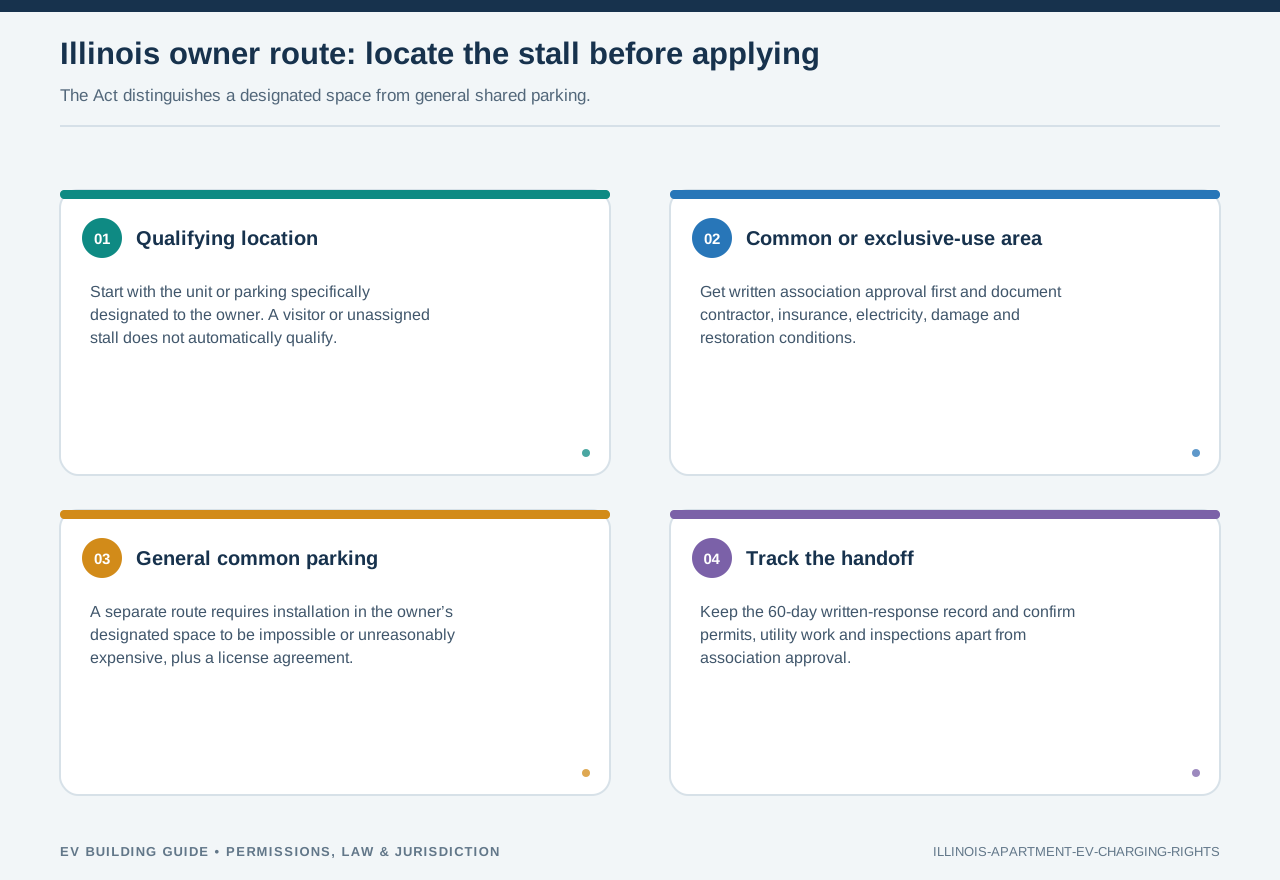
Section 30 protects a unit owner’s installation or use in the unit or a parking space designated for that owner, including a deeded or exclusive-use space. Governing documents may not effectively prohibit or unreasonably restrict a qualifying system, though reasonable restrictions, electrical codes, and local permits still apply. Confirm that the parking space is actually designated to you; general, visitor, and unassigned shared parking do not automatically qualify.
If the association requires approval, it must process the application like an architectural or property modification request and respond in writing. The application is generally deemed approved if the association does not deny it in writing within 60 days after receipt, unless the delay follows a reasonable request for more information. Keep the complete submission and delivery proof, and respond to information requests instead of treating silence as approval while details remain outstanding.
For work in a common or exclusive-use common area, the owner must first get written association approval. Conditions include a licensed and insured electrical contractor, an insurance certificate naming the association and specified representatives as additional insureds, and payment for installation and electricity. The owner is responsible for specified damage, maintenance, repairs, restoration, and buyer disclosure. The statute permits a reasonable electricity calculation or embedded submeter for common-area use. A successor owner generally inherits continuing duties; before sale, document removal or the buyer’s acceptance of those responsibilities. An owner seeking a charger in general common parking also faces a separate test: installation in the owner’s designated space must be impossible or unreasonably expensive, and a license agreement is required.
Prepare the right request
- Identify whether you are a tenant or unit owner and attach the lease, parking assignment, deed, or other document showing your right to use the space.
- Mark the charger position, wiring route, electrical-room access, and any shared or landlord-owned property on a plan or photos.
- Ask a qualified local electrical contractor to describe the equipment, service needs, code issues, metering, and work scope. Do not treat the Act as a permit or a finding that the building has capacity.
- Put electricity, insurance, contractor access, maintenance, damage, removal, and move-out or sale duties in the proposed agreement. Keep every written approval and requested revision.
- Confirm local electrical permits, inspections, utility requirements, and any association approval before starting work.
These statutes answer different questions for renters and unit owners. If the parking designation, association coverage, or a statutory condition is disputed, get Illinois legal advice before relying on a deadline or beginning work. Use the landlord permission checklist for the request packet and the local rules workflow for address-specific approvals.